Sandbox
... as a child they were fun.
“The Universe is under no obligation to make sense to you.” ― Neil deGrasse Tyson

Actually - I did not even like them as a child; prefered to create some of my first programs on my C16. But at the moment they are a big source of frustration. I was used to use AI in Visual Studio Code - and it was a well integrated environment/experience. It is possible to use it with BYOK to connect it to your local AI ...

... but I realized very soon, that the models did not properly interact with the IDE.
After some investigation I found that there is actually a standard that defines how to interact with a model: ACP (Agent Client Protocol), but the adoption on both sides is not at a point that you can just exchange the models with local ones and expect, that your workflow still works.
Visual Studio Code does not support ACP natively yet. Yes, there are extensions - but for a coorperate environment every extension is a security risk, and they can communicate with the models but the integration into the IDE is different. The result remains the same: Your workflow does not work anymore.
There are powerfull approaches to this problem like Open WebUI, or Hermes - they both have access to your filesystem one way or the other. But to execute commands they use a sandboxed environment.
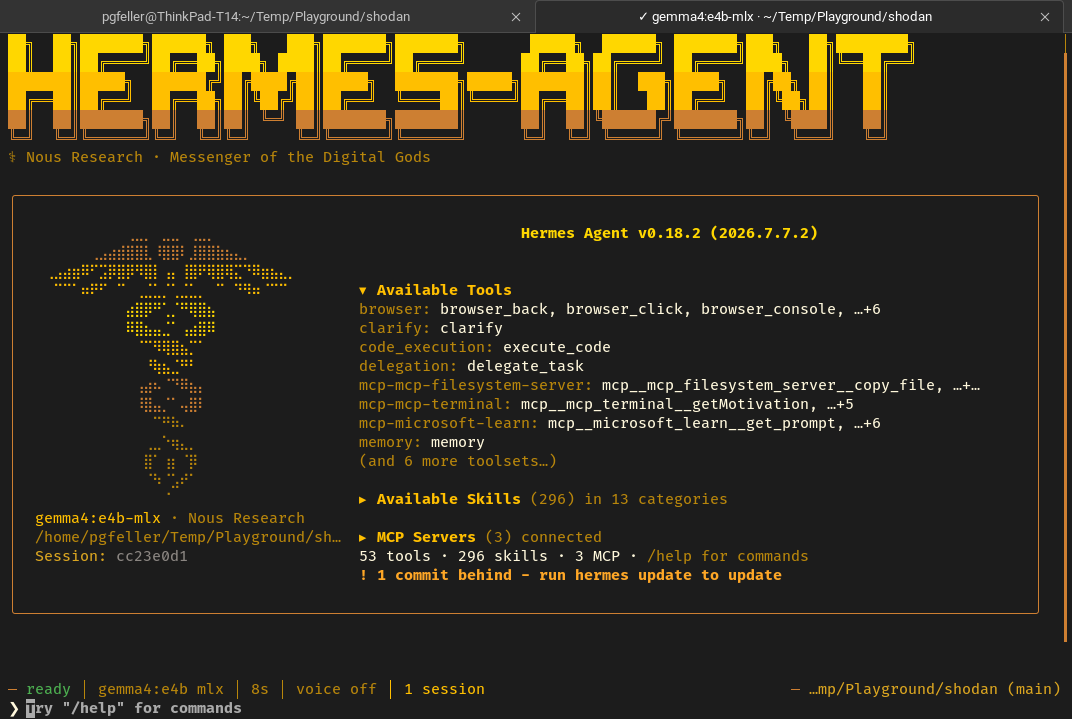
This limits their ability significantly, if you work with multiple SDK's and complex setups.
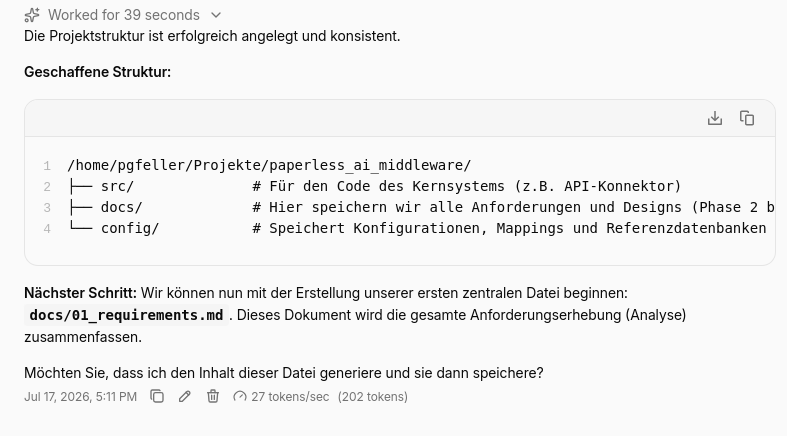
This places them somewhere between a chat bot and an agent ... a kind of consultant and advisor, but not true ai assisted development. I was not able to work efficiently on a real existing code base with them. Might be my lack of knowledge - they are impressive and can do a lot - and probably if you use a properly configured docker container as sandbox it might work. But that is not what I need - and a lot of our legacy code systems are not easy to be setup that way.
It is surpizingly hard to get out of those sandboxes and to achieve an integrated assisted development workflow.

Comments